Keto vs Low-Carb: What's the Difference?
Keto vs Low-Carb: What's the Difference?
"I'm cutting carbs" can mean very different things depending on who is saying it. For some people, it means swapping white bread for whole grain. For others, it means eating fewer than 20 grams of carbohydrates per day and getting 75% of their calories from fat. The terms "keto" and "low-carb" get used interchangeably, but they describe two genuinely different approaches to nutrition, each with its own rules, benefits, and trade-offs.
If you are considering either path, understanding the differences will help you choose the one that fits your lifestyle, preferences, and goals. Let's break it down.
What Is a Ketogenic (Keto) Diet?
A ketogenic diet is a very high-fat, very low-carbohydrate eating pattern designed to shift your body into a metabolic state called ketosis. In ketosis, your body runs primarily on fat for fuel instead of glucose from carbohydrates.
Typical Keto Macros
| Macronutrient | Percentage of Calories | For a 2,000 Calorie Diet |
|---|---|---|
| Fat | 70-75% | 155-167g |
| Protein | 20-25% | 100-125g |
| Carbs | 5-10% | 25-50g |
Most people on keto aim for 20-50 grams of net carbs per day (total carbs minus fiber). This is a strict threshold because exceeding it can knock you out of ketosis, undoing the metabolic shift that makes the diet work.
How Ketosis Works
When you drastically reduce carbohydrate intake, your body depletes its glycogen (stored carbohydrate) reserves within a few days. Without glucose readily available, your liver begins converting fat into molecules called ketone bodies, which your brain and muscles can use for energy. This process is ketosis, and it typically takes 2-7 days to enter when starting the diet.
What You Eat on Keto
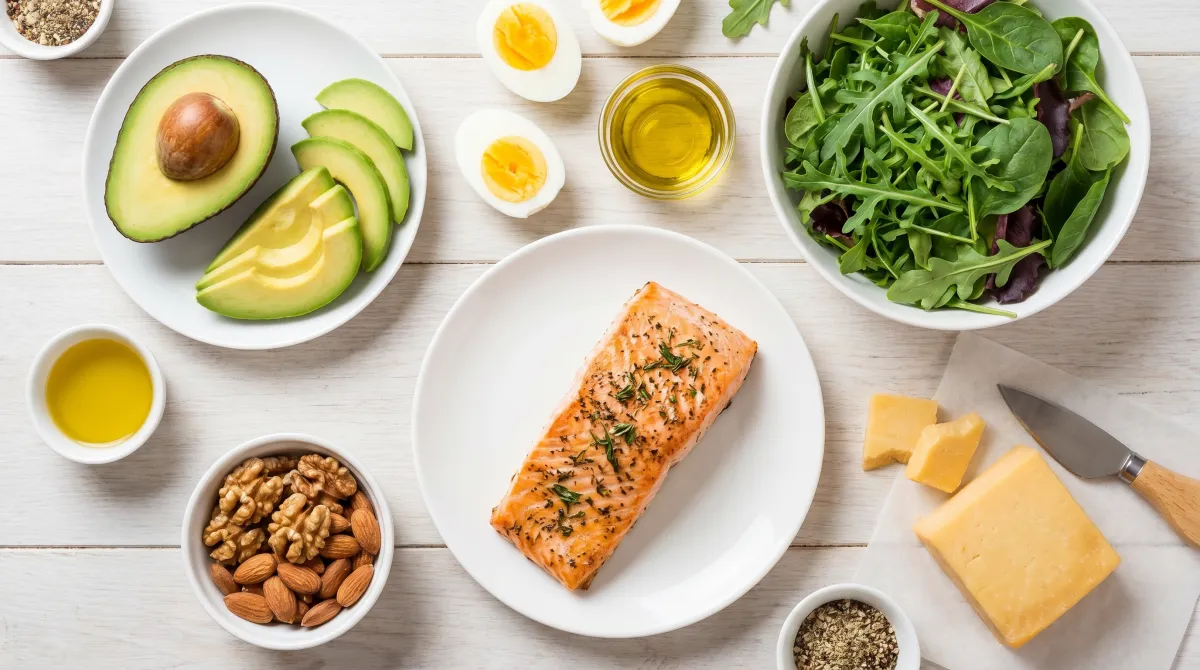
- Emphasized: Avocados, olive oil, butter, nuts, seeds, fatty fish (salmon, sardines), cheese, eggs, coconut oil, non-starchy vegetables (spinach, broccoli, zucchini, cauliflower).
- Limited: Berries in small amounts, dark chocolate (85%+), some legumes in very small portions.
- Avoided: Bread, pasta, rice, potatoes, most fruits, sugary foods, beer, milk, most beans.
What Is a Low-Carb Diet?
A low-carb diet is a broader category that simply means eating fewer carbohydrates than the standard diet, without the strict threshold required for ketosis. There is no single definition, but most low-carb diets fall in the range of 50-150 grams of carbs per day.
Typical Low-Carb Macros
| Macronutrient | Percentage of Calories | For a 2,000 Calorie Diet |
|---|---|---|
| Fat | 30-40% | 67-89g |
| Protein | 30-40% | 150-200g |
| Carbs | 20-30% | 100-150g |
Notice that protein often takes a bigger share on a low-carb diet compared to keto, and fat is moderate rather than dominant.
What You Eat on Low-Carb
- Emphasized: Lean meats, fish, eggs, vegetables, nuts, seeds, healthy fats, berries, Greek yogurt.
- Moderate amounts: Sweet potatoes, quinoa, oats, legumes, most fruits, whole grain bread.
- Limited: Sugary foods, white bread, pasta, pastries, sugary drinks.
The key difference is flexibility. On low-carb, you can have a serving of brown rice with dinner or an apple as a snack without worrying about disrupting a specific metabolic state.
Head-to-Head Comparison
| Factor | Keto | Low-Carb |
|---|---|---|
| Daily carbs | 20-50g | 50-150g |
| Primary fuel source | Fat (ketones) | Mix of fat and glucose |
| Protein intake | Moderate (20-25%) | Higher (30-40%) |
| Fat intake | Very high (70-75%) | Moderate (30-40%) |
| Flexibility | Strict | Moderate |
| Adaptation period | 2-7 days (keto flu) | Minimal |
| Food variety | More restricted | More variety |
| Social eating | Challenging | Manageable |
| Tracking importance | High (must stay in ketosis) | Moderate |
Pros and Cons of Keto
Pros
- Appetite suppression. Ketones and high fat intake tend to reduce hunger, making it easier for many people to eat fewer calories without feeling deprived.
- Stable energy levels. Once adapted, many people report fewer energy crashes since blood sugar stays stable without large carb-driven spikes and drops.
- Effective for rapid initial weight loss. The first week often shows significant scale movement (mostly water weight from glycogen depletion), which can be motivating.
- May benefit certain medical conditions. Keto was originally developed for epilepsy management and is being studied for its potential effects on type 2 diabetes, PCOS, and neurological conditions.
Cons
- Keto flu. The first week can bring headaches, fatigue, irritability, and brain fog as your body adapts to using fat for fuel.
- Highly restrictive. Eliminating most fruits, grains, and legumes makes the diet hard to sustain socially and practically.
- Nutrient gaps. Cutting out entire food groups can lead to deficiencies in fiber, certain vitamins, and minerals if not carefully planned.
- Difficult to maintain long-term. Studies show high dropout rates for strict keto after 6-12 months.
- Performance impact. High-intensity athletes and those doing explosive exercise may notice reduced performance without glycogen stores.
Pros and Cons of Low-Carb
Pros
- Sustainable for most people. The flexibility to include some carbs makes low-carb much easier to maintain as a long-term lifestyle.
- Higher protein. The emphasis on protein supports muscle retention, satiety, and body composition improvements.
- No adaptation period. You can start immediately without the flu-like transition period.
- Social flexibility. You can eat at restaurants, attend dinner parties, and share meals without extreme restrictions.
- Good for active people. Moderate carbs support exercise performance while still reducing overall carb intake.
Cons
- Slower initial results. Without the dramatic water weight loss of keto, early progress on the scale is more gradual.
- Less appetite suppression. Without ketosis, you may not experience the same level of hunger reduction.
- Requires portion awareness. Since the boundaries are less strict, it is easier to gradually drift back toward higher carb intake without realizing it.
Which One Is Right for You?
Choose Keto If:
- You respond well to strict, clearly defined rules.
- You enjoy high-fat foods like avocado, cheese, and nuts.
- You do not perform high-intensity exercise regularly.
- You are motivated by rapid initial results.
- You have a medical reason to try ketosis (consult your doctor first).
Choose Low-Carb If:
- You want a sustainable approach you can maintain for years.
- You are active and need some carbs for performance.
- You value food variety and social flexibility.
- You prefer higher protein intake.
- You want something that works without a strict metabolic threshold.
The Honest Answer
For most people, a general low-carb approach is more practical and sustainable. Keto can be powerful for specific goals and individuals, but the strictness makes it a poor fit for many lifestyles. The best diet is the one you can actually follow consistently, and consistency is what drives real, lasting results.
How to Track Either Diet With Cal AI: Calorie Scanner
Regardless of which approach you choose, tracking your carb intake is essential. On keto, staying under your carb limit is critical to maintaining ketosis. On low-carb, monitoring carbs prevents the gradual creep back toward old habits.
Cal AI: Calorie Scanner makes tracking either diet straightforward. Scan your meals to get an instant breakdown of carbs, fat, and protein. This is especially helpful for keto, where hidden carbs in sauces, dressings, and processed foods can easily push you over your daily limit without you realizing it.
A few specific ways Cal AI: Calorie Scanner helps with carb-restricted diets:
- Spot hidden carbs in meals that look low-carb but contain sugar or starch in sauces and seasonings.
- Track net carbs vs. total carbs to accurately manage your daily budget on keto.
- Monitor your fat-to-protein ratio to make sure you are getting enough fat on keto or enough protein on low-carb.
- Review daily and weekly trends to catch gradual carb creep before it becomes a pattern.
Whether you go full keto or take the more moderate low-carb route, having accurate, effortless tracking takes the guesswork out of the equation and lets you focus on enjoying your food within whatever framework works best for you.