How Many Calories Are in Common Everyday Foods?
How Many Calories Are in Common Everyday Foods?
If you have ever wondered whether a banana or a handful of almonds costs you more calories—or tried to estimate a plate of pasta without a label in sight—you are not alone. Knowing the rough calorie counts of everyday foods is one of the most practical nutrition skills you can build. You do not need to memorize a spreadsheet; you just need a reliable mental map of the foods you eat most often.
This guide covers the staple foods most people eat day to day, grouped by category, so you can start making more informed decisions at every meal.
---
Why Calorie Awareness Matters
Calories are a measure of the energy food provides. Eating more than your body uses over time leads to weight gain; eating less leads to weight loss. Simple in theory, tricky in practice—because portion sizes vary, cooking methods change calorie density, and most of us genuinely underestimate how much we eat.
You do not need to count every gram forever. Even a rough sense of where calories come from helps you stop overeating without feeling deprived.
A useful rule of thumb: A gram of carbohydrate or protein provides about 4 calories; a gram of fat provides about 9. That is why fatty foods are calorie-dense even in small portions.
---
Calories in Everyday Foods by Category
Grains and Bread
Grains are a major calorie source for most people. Portion size is everything here.
| Food | Typical Serving | Approx. Calories |
|---|---|---|
| White bread | 1 slice (30 g) | ~80 kcal |
| Whole grain bread | 1 slice (30 g) | ~70–80 kcal |
| Cooked white rice | 1 cup (186 g) | ~240 kcal |
| Cooked brown rice | 1 cup (195 g) | ~215 kcal |
| Cooked pasta | 1 cup (140 g) | ~220 kcal |
| Rolled oats (dry) | ½ cup (40 g) | ~150 kcal |
| Tortilla (medium flour) | 1 tortilla (45 g) | ~140 kcal |
A common mistake is eyeballing a "cup" of cooked rice and serving yourself two. That doubles your calorie count instantly.
---
Proteins
Protein foods are satisfying and essential for muscle maintenance—but their calorie counts vary widely depending on fat content.
| Food | Typical Serving | Approx. Calories |
|---|---|---|
| Chicken breast (cooked) | 100 g | ~165 kcal |
| Chicken thigh (cooked) | 100 g | ~210 kcal |
| Salmon (cooked) | 100 g | ~208 kcal |
| Tuna in water (canned) | 100 g | ~110 kcal |
| Whole egg | 1 large (50 g) | ~70 kcal |
| Greek yogurt (plain, low-fat) | 170 g container | ~100 kcal |
| Cottage cheese (low-fat) | ½ cup (113 g) | ~90 kcal |
| Firm tofu | 100 g | ~76 kcal |
Eggs are often underestimated. Two scrambled eggs cooked in a tablespoon of butter adds roughly 100 extra calories from the fat alone.
---
Dairy and Alternatives
| Food | Typical Serving | Approx. Calories |
|---|---|---|
| Whole milk | 240 ml (1 cup) | ~150 kcal |
| Semi-skimmed milk | 240 ml | ~120 kcal |
| Cheddar cheese | 30 g (small slice) | ~120 kcal |
| Mozzarella (part-skim) | 30 g | ~70 kcal |
| Oat milk (unsweetened) | 240 ml | ~90–120 kcal |
| Almond milk (unsweetened) | 240 ml | ~30–40 kcal |
Cheese is calorie-dense because of its fat content. A generous handful grated over pasta is easily 60–80 g—that is 240–320 kcal before the meal itself.
---
Fruits and Vegetables
Vegetables are generally very low in calories; fruits are moderate. Neither should be feared.
| Food | Typical Serving | Approx. Calories |
|---|---|---|
| Banana (medium) | 118 g | ~105 kcal |
| Apple (medium) | 182 g | ~95 kcal |
| Strawberries | 1 cup (152 g) | ~49 kcal |
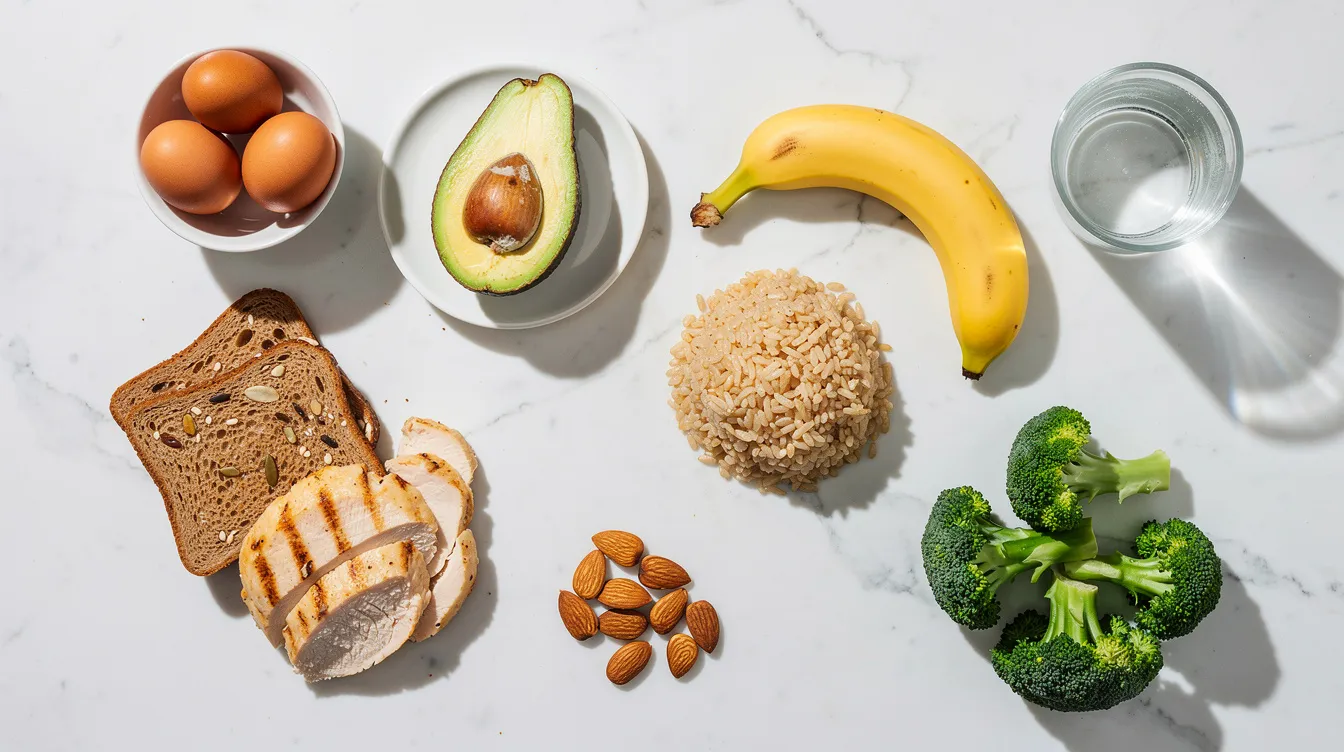
| Avocado (half) | ~100 g | ~160 kcal |
| Broccoli (cooked) | 1 cup (156 g) | ~55 kcal |
| Spinach (raw) | 2 cups (60 g) | ~14 kcal |
| Sweet potato (medium, baked) | ~130 g | ~115 kcal |
| Carrots | 1 medium (61 g) | ~25 kcal |
Avocado stands out—it is nutrient-rich but calorically significant because of its healthy fat content. A whole avocado can run 320+ calories.
---
Fats, Nuts and Snacks
These foods are easy to overeat because their portions look small.
| Food | Typical Serving | Approx. Calories |
|---|---|---|
| Olive oil | 1 tbsp (14 g) | ~120 kcal |
| Butter | 1 tbsp (14 g) | ~100 kcal |
| Almonds | 23 nuts (28 g) | ~165 kcal |
| Peanut butter | 2 tbsp (32 g) | ~190 kcal |
| Mixed nuts | 28 g (small handful) | ~170–180 kcal |
| Crisps / potato chips | 28 g small bag | ~150 kcal |
| Dark chocolate (70 %+) | 30 g (2–3 squares) | ~170 kcal |
Oils and butter are pure fat, which is why even a tablespoon matters. Cooking two chicken breasts in two tablespoons of oil adds nearly 240 calories to what otherwise looks like a lean meal.
---
Drinks
Liquid calories are notoriously easy to overlook.
- Black coffee or plain tea – near zero
- Latte (whole milk, medium) – ~180–200 kcal
- Orange juice (240 ml) – ~110 kcal
- Cola (330 ml can) – ~140 kcal
- Beer (330 ml, 5 %) – ~150 kcal
- Smoothie (shop-bought, 500 ml) – often 250–400 kcal
A large flavoured coffee, a glass of juice and one beer can add 500+ calories to your day without a single bite of food.
---
Practical Tips for Using This Knowledge
- Anchor on portions. The numbers above assume typical servings. Weigh food occasionally—even just for a week—to calibrate your eye.
- Watch cooking fats. The calorie count of a plain chicken breast can nearly double depending on how it is cooked.
- Fill half your plate with vegetables. They add volume, fibre and micronutrients for very few calories.
- Account for drinks. Swap one sugary drink a day for water and you might save 150–200 calories without changing a single meal.
- Use technology as a shortcut. When estimating a mixed meal is too tricky, Cal AI: Calorie Scanner lets you snap a photo of your plate and get an instant calorie and macro breakdown—useful when you are eating something without a label.
---
The Bigger Picture
Memorising exact numbers is less important than developing a feel for calorie density—the idea that a small handful of nuts has more calories than a large bowl of salad. Once you have that intuition, eating well becomes far less stressful.
Start with the foods you eat every day. Look up one or two unfamiliar items a week. Over time, you will build a reliable mental library that makes healthy eating feel natural rather than complicated.