How to Stop Overeating: Practical Tips That Work
Why Overeating Happens (and Why It's Not Just About Willpower)
If you've ever eaten past the point of fullness and wondered why, you're far from alone. Overeating is one of the most common struggles people face when trying to manage their weight or improve their eating habits. The good news is that it's rarely about a lack of self-control. It's usually about environment, habits, hunger signals, and food choices—all of which you can actually change.
This article breaks down practical, realistic strategies to help you eat the right amount for your body without feeling deprived or obsessed.
---
Understand Your Hunger Signals
One of the biggest reasons people overeat is that they've lost touch with their body's natural hunger and fullness cues. Stress, distraction, and highly processed foods can all blunt these signals over time.
A simple tool is the hunger-fullness scale:
| Scale Level | How You Feel |
|---|---|
| 1–2 | Ravenously hungry, low energy |
| 3–4 | Hungry, stomach rumbling |
| 5–6 | Comfortable, satisfied |
| 7–8 | Full, slightly uncomfortable |
| 9–10 | Stuffed, sluggish |
Aim to start eating at around a 3–4 and stop at around a 5–6. It sounds simple, but building this awareness takes practice—especially when you're used to eating on autopilot.
---
Slow Down at Every Meal
Your stomach takes roughly 15–20 minutes to signal to your brain that you're full. Eating too fast means you can easily consume several hundred extra calories before that message arrives.
Practical ways to slow down:
- Put your fork down between bites
- Chew each mouthful more thoroughly
- Aim for meals to last at least 15–20 minutes
- Avoid eating while scrolling your phone or watching TV
- Take a few deep breaths before you start eating
Slowing down is one of the most underrated and free strategies for reducing how much you eat.
---
Build a Plate That Actually Keeps You Full
Not all meals are created equal when it comes to satiety. Foods high in protein and fiber tend to keep you satisfied longer, while highly processed, low-fiber foods can leave you hungry again within an hour.
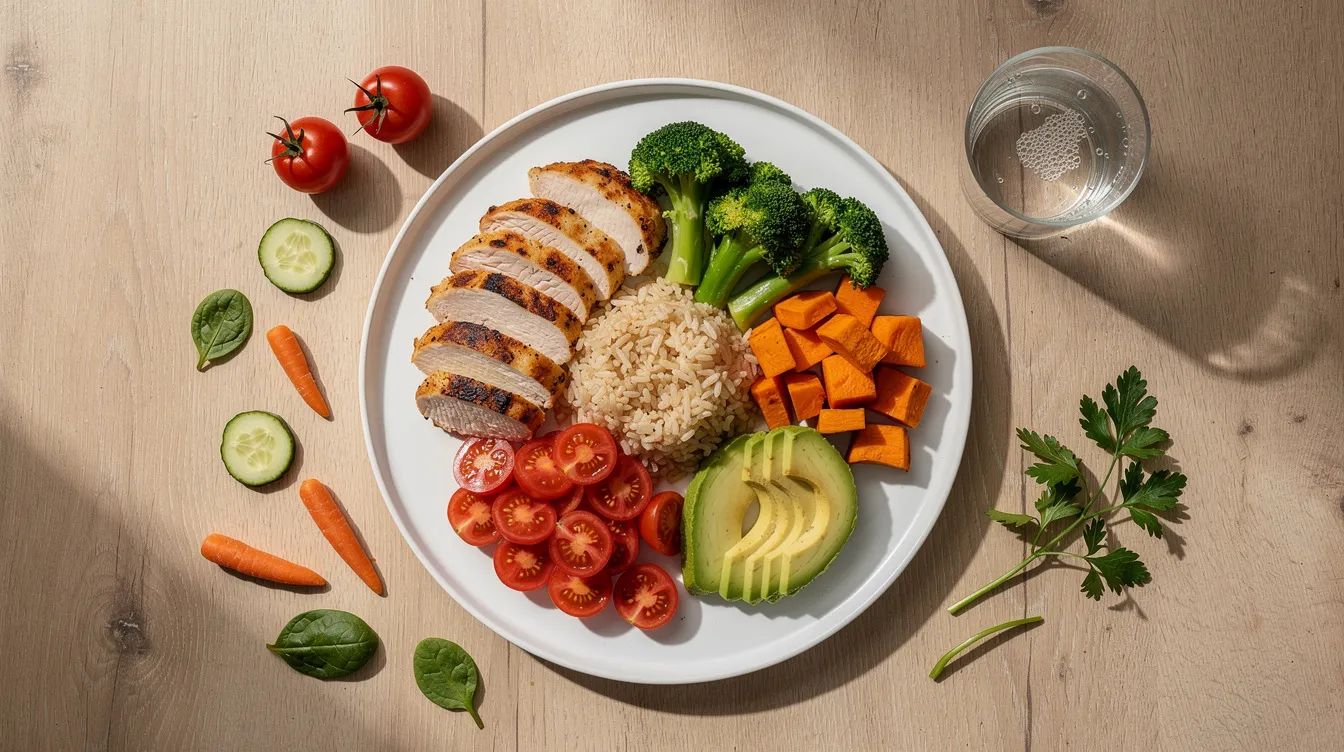
A general guide for a filling meal: fill half your plate with vegetables, a quarter with lean protein, and a quarter with whole grains or starchy vegetables.
This isn't a strict rule, but it naturally boosts fiber and protein—two of the most well-studied nutrients for reducing overall calorie intake.
High-satiety food swaps to try:
- White rice → Brown rice or quinoa
- Chips as a snack → Apple with nut butter
- Sugary cereal → Greek yogurt with berries
- Juice → Whole fruit (more fiber, slower digestion)
---
Remove Friction From Good Choices
Your environment shapes your behavior more than motivation does. If a bag of chips is on the counter and fruit requires washing and cutting, you already know which one wins most of the time.
Environment tweaks that genuinely help:
- Keep a fruit bowl visible on the counter
- Prep vegetables in advance so they're grab-and-go
- Store less healthy foods in opaque containers at the back of the fridge
- Serve food from the stove rather than leaving dishes on the table (studies suggest people eat less when they have to get up for seconds)
- Use smaller plates and bowls—standard portion sizes look larger and feel more satisfying on a smaller plate
These aren't tricks; they're using your environment to support the choices you already want to make.
---
Don't Skip Meals to "Save" Calories
Skipping breakfast or lunch with the intention of eating less overall often backfires. Arriving at dinner ravenously hungry makes it far harder to eat slowly or stop at a comfortable fullness level.
Regular, balanced meals throughout the day tend to reduce the intensity of hunger at any given point—making overeating less likely. This doesn't mean you must eat six times a day; find a meal rhythm that works for you, but don't let yourself get to that 1–2 on the hunger scale before eating.
---
Build Awareness Around What You're Actually Eating
Sometimes overeating isn't dramatic bingeing—it's a slow, consistent drift of portions that are slightly too large, or snacks that add up invisibly. This is where tracking your intake, even briefly, can be genuinely eye-opening.
Cal AI: Calorie Scanner makes this low-effort: snap a photo of your meal and instantly see calories, protein, carbs, fat, and a full ingredient breakdown. You don't have to track forever—even a few weeks of awareness can permanently recalibrate your sense of portions.
If you're also working on understanding your overall calorie needs, our guide to tracking macros for beginners explains protein, carbs, and fat targets in plain language.
---
Manage Emotional and Stress Eating
Food is genuinely comforting, and eating in response to stress, boredom, or anxiety is extremely common. Recognizing the difference between physical hunger and emotional hunger is a key skill.
Signs you might be eating emotionally:
- Hunger came on suddenly and feels urgent
- You're craving something very specific (usually comfort food)
- You're not actually hungry—you just ate an hour ago
- Eating doesn't satisfy the feeling
When you notice emotional hunger, try pausing for five minutes before eating. Go for a short walk, drink a glass of water, or call someone. You're not trying to suppress the urge forever—just creating a small gap between the trigger and the response.
---
A Quick Summary: What Actually Works
- Tune into hunger and fullness cues before and during meals
- Eat slowly and without screens
- Prioritize protein and fiber to stay satisfied longer
- Redesign your environment to make good choices easier
- Don't skip meals—it usually backfires
- Track occasionally to build portion awareness
- Pause before emotional eating—identify whether you're truly hungry
---
Stopping overeating doesn't require a perfect diet or extraordinary willpower. Small, consistent changes to how you eat, what you keep at home, and how much attention you pay during meals can make a surprisingly large difference over time. Start with one or two strategies, build the habit, and add more as they become second nature.