What to Eat Before and After a Workout
What to Eat Before and After a Workout
Food is your fuel. Whether you are heading to the gym for a strength session, going for a morning run, or fitting in a lunchtime yoga class, what you eat around that workout matters more than most people realize. Get it right and you perform better, recover faster, and feel less like collapsing on the sofa afterward. Get it wrong and you risk sluggish energy, muscle soreness that lingers too long, and progress that stalls for no obvious reason.
This guide breaks down the essentials of pre- and post-workout nutrition in plain language, without any extreme rules.
---
Why Workout Nutrition Matters
Exercise puts your body under a controlled form of stress. Muscles burn through stored glycogen (your body's quick-access carbohydrate fuel), tiny muscle fibers develop small tears that need repair, and fluids and electrolytes are lost through sweat. Eating the right foods at the right times helps you:
- Start training with adequate energy stores
- Maintain intensity throughout the session
- Kickstart muscle repair and glycogen replenishment afterward
- Reduce excessive soreness and fatigue
None of this requires expensive supplements or complicated meal plans. Whole foods work beautifully.
---
What to Eat Before a Workout
The Key Nutrients
Carbohydrates are the priority before exercise. Your muscles run primarily on glycogen, which comes from carbs. A pre-workout meal or snack that includes easy-to-digest carbs gives you available energy right when you need it.
Protein before training also has value. It supplies amino acids that can limit muscle breakdown during the session, especially for strength-based workouts.
Fat and fiber are best kept lower in the pre-workout window because they slow digestion. A heavy, fatty meal right before exercise can leave you feeling sluggish or even nauseous.
Timing Guidelines
| Time Before Training | Meal Size | Examples |
|---|---|---|
| 2–3 hours | Full balanced meal | Chicken, rice, and vegetables |
| 1–1.5 hours | Medium snack | Banana with peanut butter, oats with Greek yogurt |
| 30–45 minutes | Light snack | A banana, a small rice cake, a handful of raisins |
| Under 30 minutes | Very light or nothing | A few dates, a small glass of juice if needed |
These windows are general guidelines. Individual digestion speeds vary, so experiment to find what feels best for you.
Practical Pre-Workout Food Ideas
- Oats with banana and a drizzle of honey — slow-release carbs plus quick energy
- Whole-grain toast with eggs — carbs plus protein for strength sessions
- Greek yogurt with berries — light but protein-rich, good for shorter workouts
- A large banana — one of the most convenient pre-workout snacks around
- A small smoothie with fruit, oats, and a little yogurt — easy to digest and portable
Tip: Morning exercisers often train fasted and still perform well, especially for moderate-intensity cardio. If you feel fine training fasted, that is perfectly valid. If you feel dizzy or weak, try a small carb snack 20–30 minutes beforehand.
---
What to Eat After a Workout
The Key Nutrients
Protein is the headline nutrient after training. It provides the amino acids your muscles need to repair and rebuild. Most research suggests aiming for roughly 20–40 g of protein in your post-workout meal, though exact needs depend on your body size, workout intensity, and overall daily intake.
Carbohydrates after training help replenish muscle glycogen that was depleted during exercise. This is especially important if you train frequently (more than once a day or multiple days in a row without rest).
Hydration deserves a mention here too. Replacing the fluids and electrolytes lost during exercise is critical for recovery. Water is usually enough for sessions under an hour; longer or more intense sessions may benefit from a drink with some sodium and potassium.
Timing — The "Anabolic Window"
You may have heard that you need to eat within 30 minutes of finishing a workout or the benefits disappear. The reality is more relaxed. While eating within 1–2 hours after training is sensible, the total amount of protein and calories you eat across the whole day matters far more than a narrow post-workout window. Do not stress if life gets in the way.
Practical Post-Workout Food Ideas
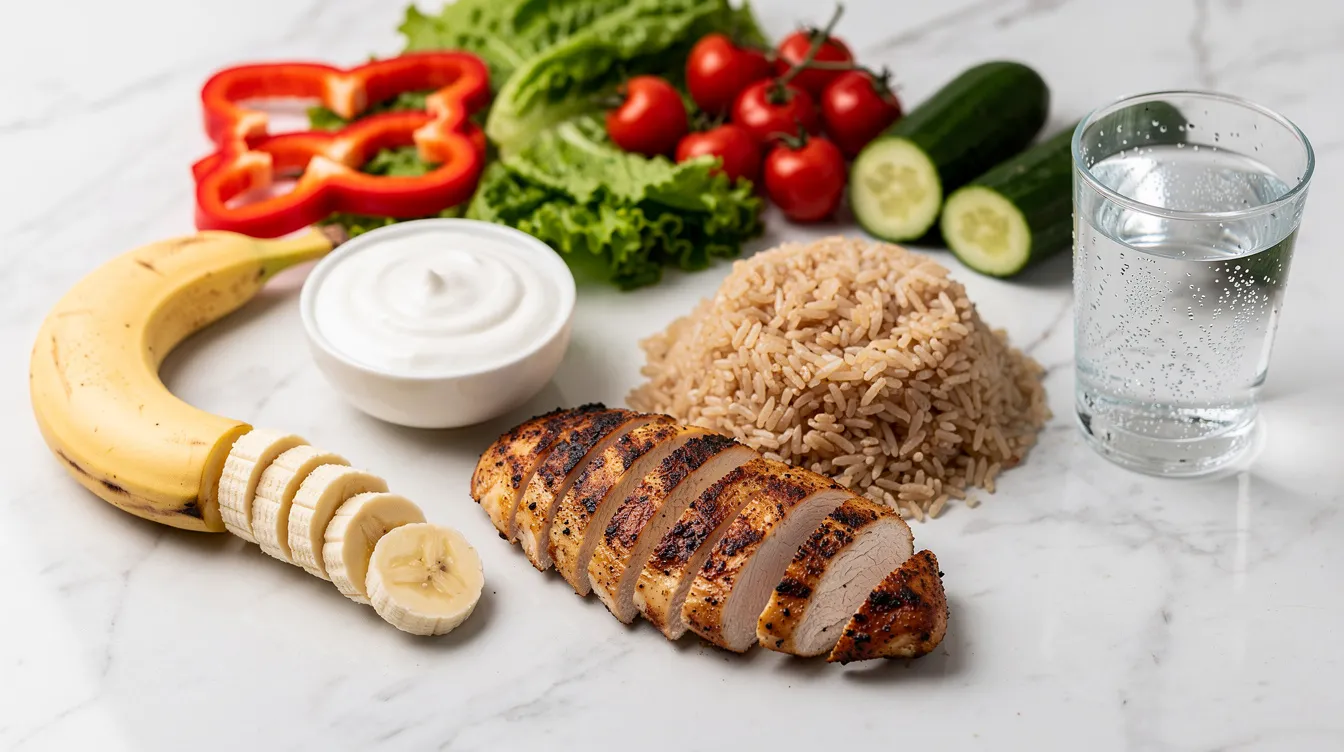
- Grilled chicken or turkey with rice and steamed vegetables — the classic complete recovery meal
- Salmon with sweet potato — protein plus anti-inflammatory omega-3 fats and quality carbs
- Eggs on whole-grain toast — quick, affordable, and effective
- Cottage cheese with fruit — high in slow-digesting casein protein, good if eating before bed
- A protein smoothie with milk, a banana, and oats — fast and convenient when you are short on time
---
Putting It All Together
Good workout nutrition does not have to be complicated. Here is a simple framework:
- Before: Prioritize carbs, include some protein, go easy on fat and fiber, and give your food time to digest.
- After: Focus on protein and carbs, eat within a couple of hours, and drink plenty of water.
- All day: Total daily nutrition matters most. One perfect pre-workout snack will not override a consistently poor diet. Aim for balanced meals across the whole day.
If you are curious about how your overall macros stack up — not just around workouts but throughout the day — it helps to actually track what you are eating for a while. Cal AI: Calorie Scanner lets you snap a photo of your post-workout meal and instantly see its protein, carbs, fat, and calories, which makes it much easier to hit your targets without guessing.
For a broader look at how macros work and why they matter beyond just exercise, the beginner's guide to macro tracking is a great next read.
---
A Few Things to Keep in Mind
- Needs vary. A competitive athlete training twice a day has very different nutrition needs from someone doing a 30-minute walk three times a week. Adjust portions and meal complexity to your actual training load.
- Supplements are optional. Protein shakes are convenient but no more effective than whole-food protein sources. Whole foods also come with vitamins, minerals, and fiber that supplements lack.
- Consistency beats perfection. Eating reasonably well before and after most sessions will produce better results over time than obsessing over the perfect meal once in a while.
Fuel your body well, train consistently, and the results will follow.